Summary
Countryside Trees was appointed by a long-standing client to project manage the restoration of a severely
decayed Grade II listed pedestrian oak bridge at Gedding Hall. Originally replaced in the 1970s with a timber
structure, however, due to the bridge’s listed status, a comprehensive heritage-sensitive approach was
essential.
Aims/Objectives
Our client’s primary objective was to ensure a swift and seamless restoration process, with particular
emphasis on clear communication and the involvement of all relevant stakeholders from the outset. Their
priority was not only the efficient execution of the works but also compliance with heritage regulations,
structural integrity, and long-term usability.
They sought a solution that would reinstate functional access while preserving the historical character of the
site wherever possible. This required collaborative input from conservation bodies, architects, engineers,
and specialist contractors to deliver a result that balanced tradition with modern resilience.
What did you do?
Upon initial inspection, it became evident that the bridge was significantly more deteriorated tha
anticipated.
Our first task was to submit a Listed Building Application, which required detailed architectural drawings and
photographic documentation. We were advised to involve Historic England, who supported the project by
providing guidance during the pre-planning phase and expressed approval for the proposed restoration.
To strengthen the application, we engaged a specialist Structural Engineer to evaluate the structural integrity
of the original bridge. They identified which components could be salvaged and spliced, and which were
beyond repair.
Once Listed Building Consent was granted, it came with several conditions. Notably, every piece of timber
had to be assessed by a Listed Building Officer after being removed from site and delivered to the
carpenter’s workshop. With this data, the architect produced comprehensive drawings and a milling guide
Approximately 30% of the original timber was successfully spliced and reused. For the remainder, we milled
replacement timber in-house and commissioned a specialist carpenter to replicate intricate side elements.
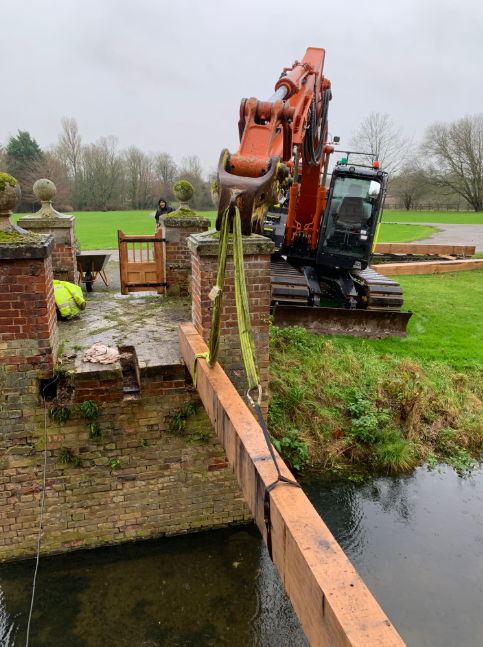
Following the milling process, all components were transported to site and reinstated using a 14-tonne
crane.
What resources did you need?
- Architect
- Structural Engineer
- Specialist Carpenter
Has it been evaluated? How successful has it been?
Following the completion of restoration works, the bridge underwent a formal inspection.
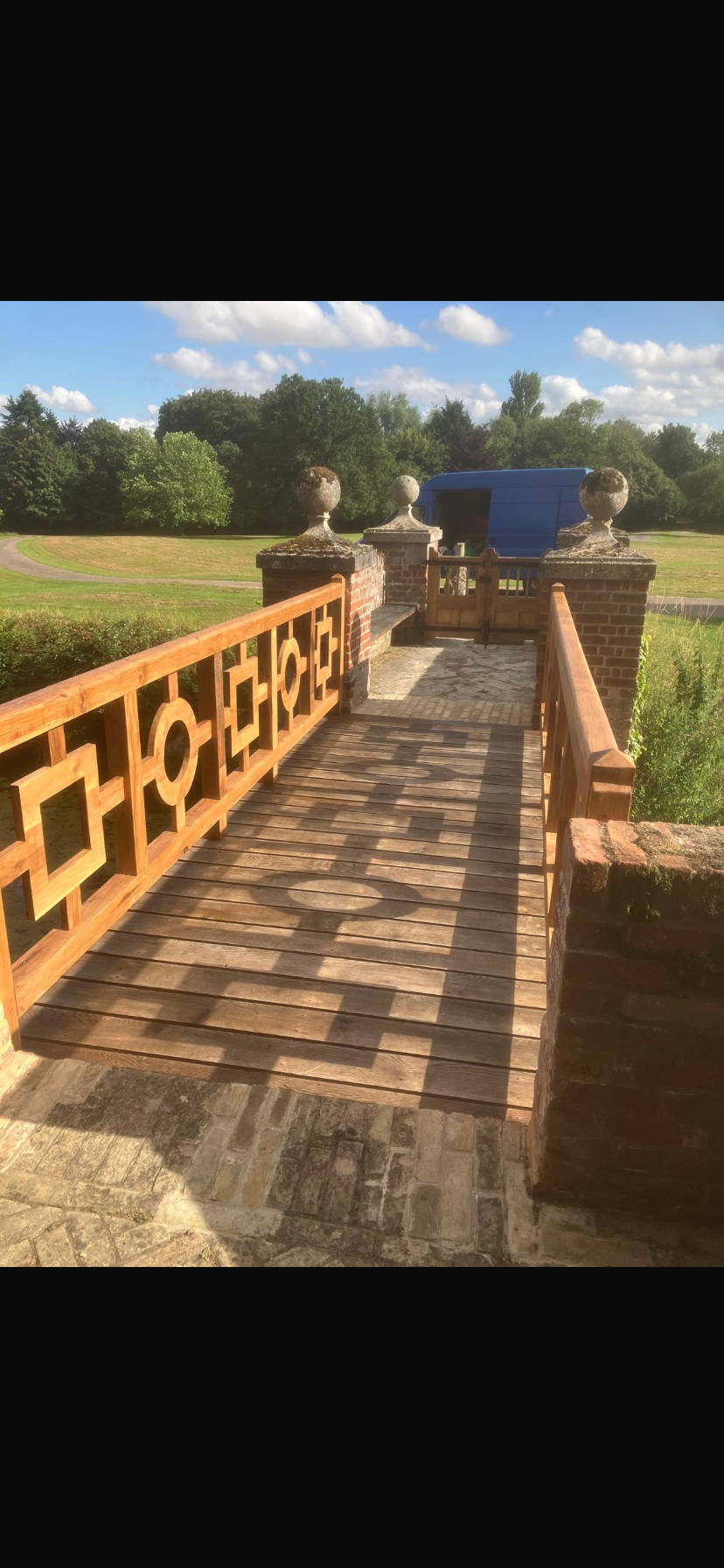
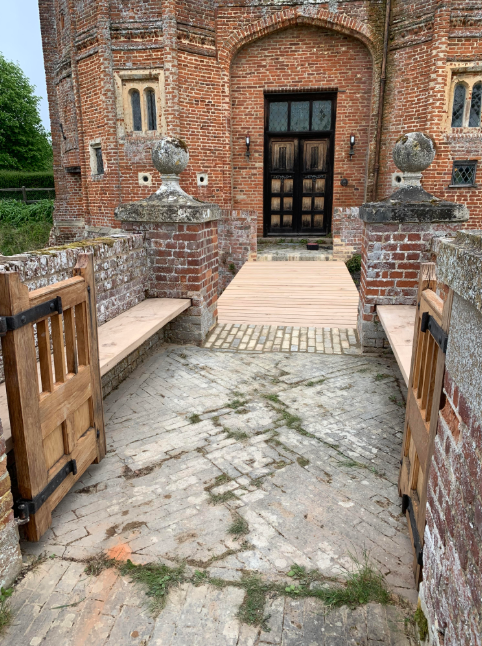
The inspectors commended the project team for the exceptional level of detail achieved throughout the process. Particular praise was given to the faithful replication of the original design features, with the bridge now reflecting its 1970 appearance down to the precise timber detailing and architectural profiles. Their feedback underscored the project’s success in balancing structural renewal with heritage preservation.
With the final approvals signed off, the bridge was formally reinstated for use—delivering both functional
access and architectural continuity.
The client was absolutely thrilled with the outcome, expressing deep satisfaction with the quality of the
works. The restoration not only exceeded their expectations but also reinstated a cherished part of the
property’s history.