Summary
A significant contamination event occurred at a property in Diss due to a Rayburn oil leak, which led to oil
migrating into the blinding layer beneath the damp-proof membrane (DPM) of the floor and the soils
beneath. The existing floor was not up to building control standards and lacked any insulation properties.
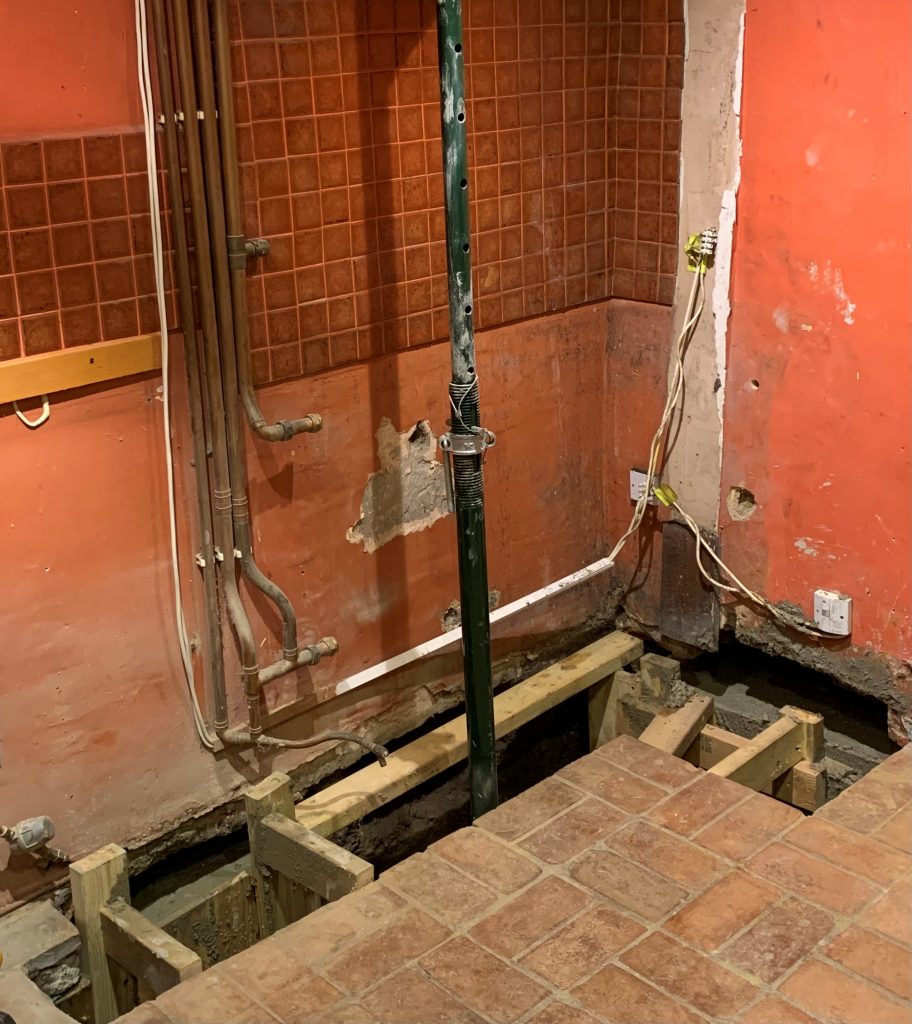
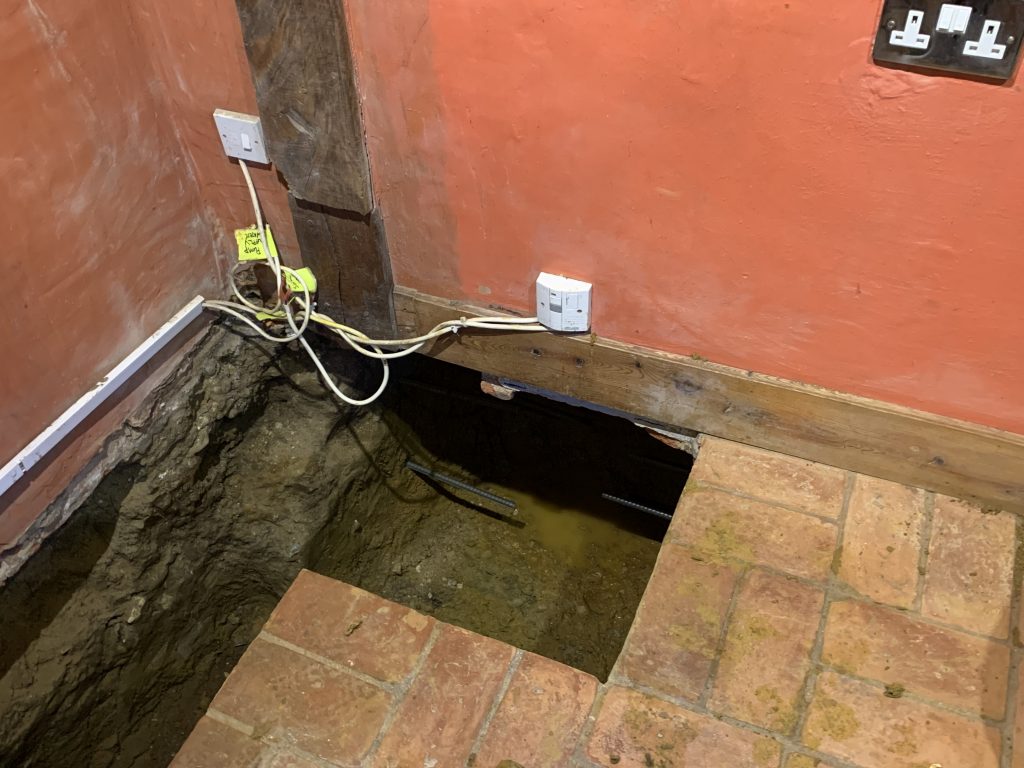
Building Control mandated a full upgrade to current building regulations, requiring the floor to be excavated
to a depth of 550mm below the finished level. This process revealed that the property had no traditional
foundations, being constructed directly on compacted flint and soil. As a result, underpinning was necessary
to structurally support the load-bearing walls of the property and prevent destabilisation of the floor during
excavation.
Methodology
- Initial Assessment
– The Rayburn leak was identified as the source of oil contamination beneath the DPM.
– The floor was found to be substandard, lacking insulation and modern construction features.
– Building Control required the floor to be excavated to 550mm below the finished level to accommodate a gas membrane, 150mm of new insulation, 150mm concrete and meet regulatory standards.
– Excavation revealed the absence of foundations, with the building resting on compacted flint and soil. - Planning and Design
– Structural engineers were engaged to design an underpinning solution suitable for the unique site
conditions.
– The underpinning design accounted for the need to rebuild wall structures and avoid trapping
contaminants within the new foundation. - Execution
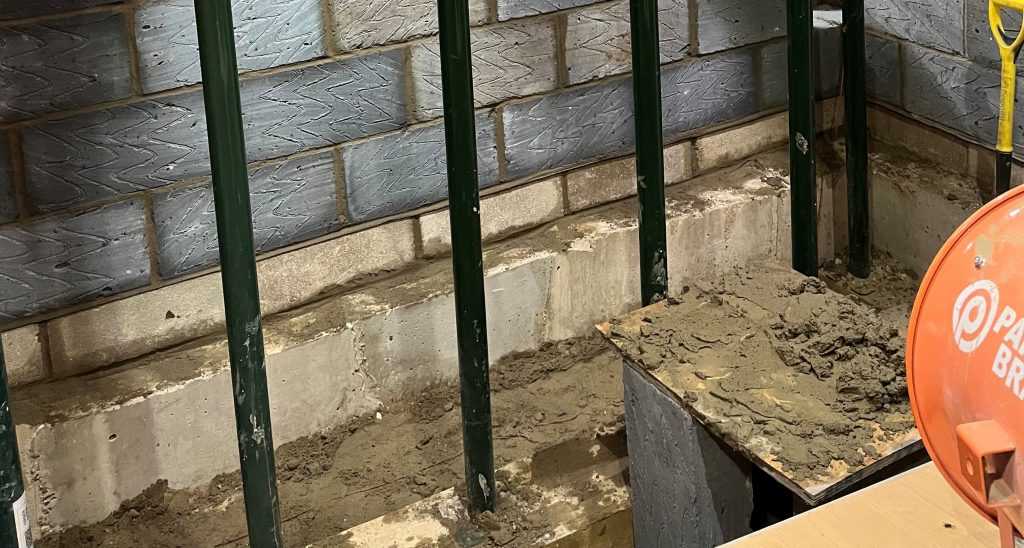
– Underpinning bays were set out as per the drawings, excavated and FND4 concrete as specified
was then poured, finishing 75mm below the base of the existing wall structure, using a concrete
vibrating poker to maximise the structural strength of the bay. 48 hour stand downs were instigated,
then using a 3:1 mix ratio of dry pack. The dry packing approach was chosen to prevent
encapsulating any remaining contaminants within the lower parts of the existing walls allowing for
safer remediation and future wall removal.
– The floor was excavated to the required depth, removing the contaminated blinding and subsoil.
– Samples of the soils at optimum depth were sent to the lab for confirmation the contamination had
been removed.
– Reinstated the floor according to building control regulations.
Has it been evaluated? How successful has it been?
The project successfully addressed both the contamination and structural deficiencies of the property.
Contaminated materials were safely removed, and the use of dry-pack underpinning allowed for effective
remediation without trapping hazardous substances. The new foundation provided a robust and compliant
base for reconstruction, meeting all Building Control requirements. The property now benefits from a
modern, insulated floor and structurally sound walls, ensuring long-term safety and regulatory compliance.
The project demonstrates the importance of thorough assessment, adaptive engineering solutions, and
close collaboration with regulatory authorities in complex remediation and underpinning scenarios.