Summary
We were instructed by the principal contractor to undertake the removal of contaminated sections from a
load-bearing third-party wall. The project’s primary objective was to eliminate kerosine contamination and
address structural deficiencies, particularly where a clay lump chimney was inadequately supported. The
chimney, previously supported only along the central line of the third-party wall, required the installation of
permanent steel supports and a plate structure to ensure stability once the third-party wall beneath was
removed and to provide permanent ongoing structural support.
Methodology
- Initial Assessment
The site was evaluated, confirming contamination and the need for structural intervention. - Planning and Design
– Structural Engineer appointed to design underpinning solution in preparation for wall removal phase.
– Drawings prepared, third-party wall contract under The Party Walls Act 1996 and approvals obtained.
– Building Control engaged for compliance checks throughout the process. - Execution
Underpinning:
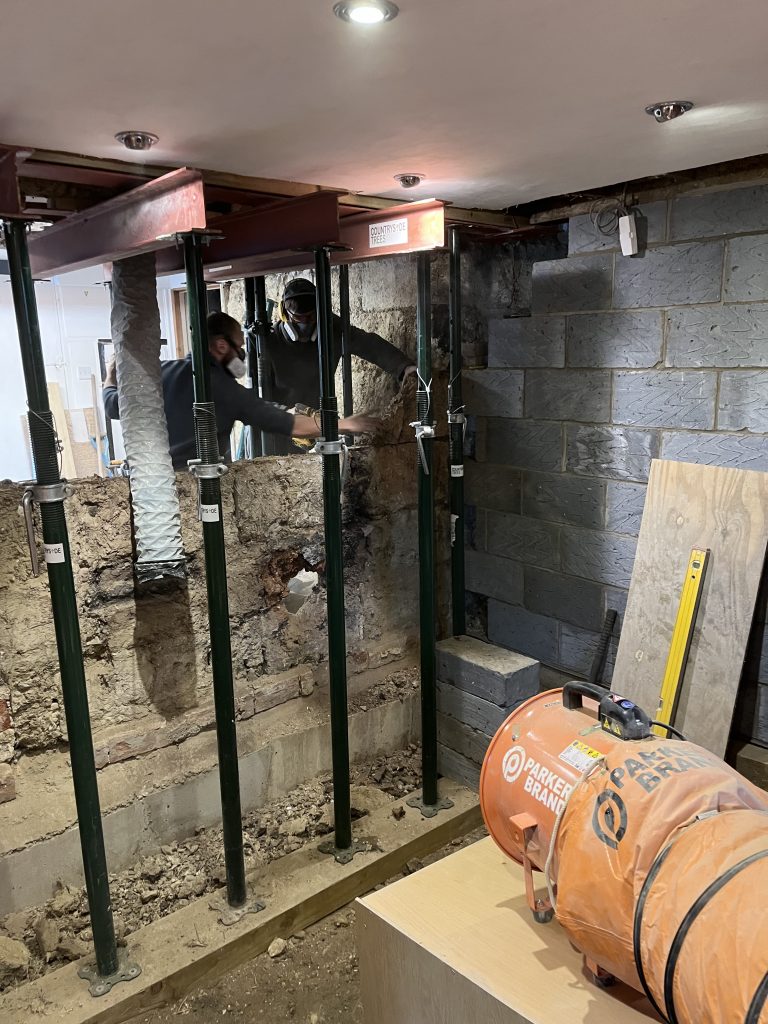
In sequential order, set by the structural engineer we commenced the excavation and installation of the 15 underpin bays, in a series of 9 pours with 48hr stand down time between each pour and then dry pack to a 3:1 mix.
Temporary & Permanent Support::
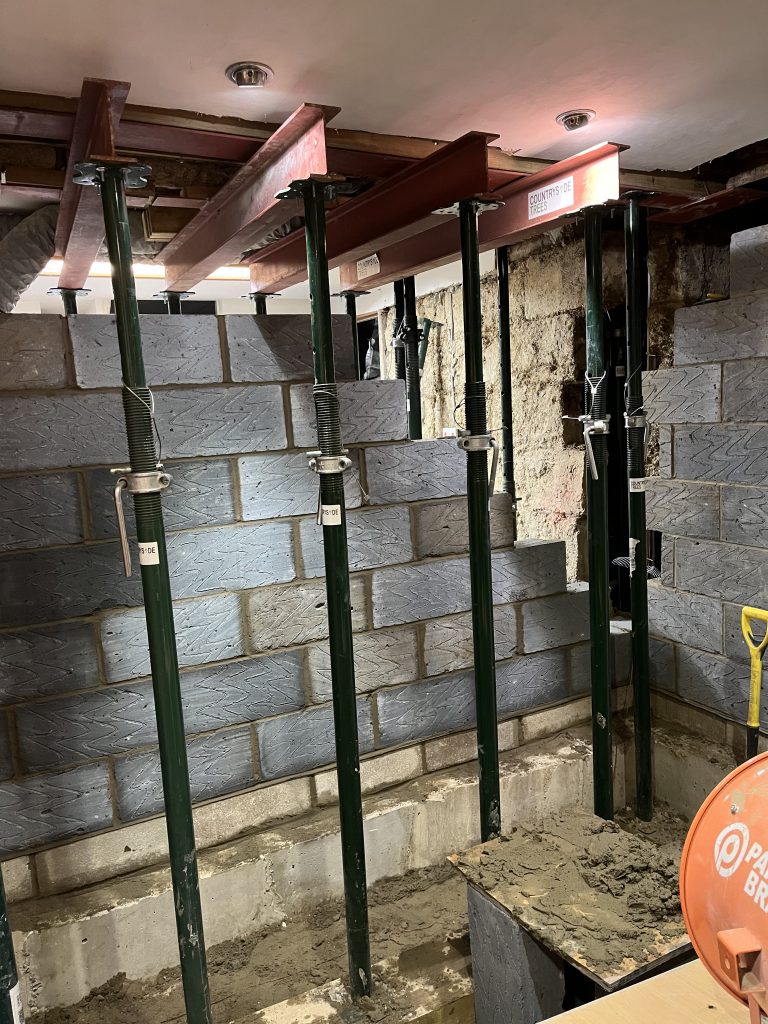
Specially fabricated needle beams, rated for the required loads, were installed by carefully removing small wall sections to allow beam placement. Acro props were leveled and tensioned to bear the third-party wall and chimney’s weight, repeated five times per phase.
Phased Wall Removal:
The third-party wall, approximately 8–9 meters in length and up to 1.8 meters in height, was removed in 2-meter sections as directed by the structural engineer, across four phases.
Once the wall and the dry packing was removed this left the top of our underpin bays as level firm foundations allowing us to rebuild. - Rebuilding:
High-density 7.4 kN concrete blocks were laid below the DPC, with lighter 3.8 kN blocks above, all set level and tied into the existing clay lump using heli bar and lime mortar for compatibility. - Finishing Works:
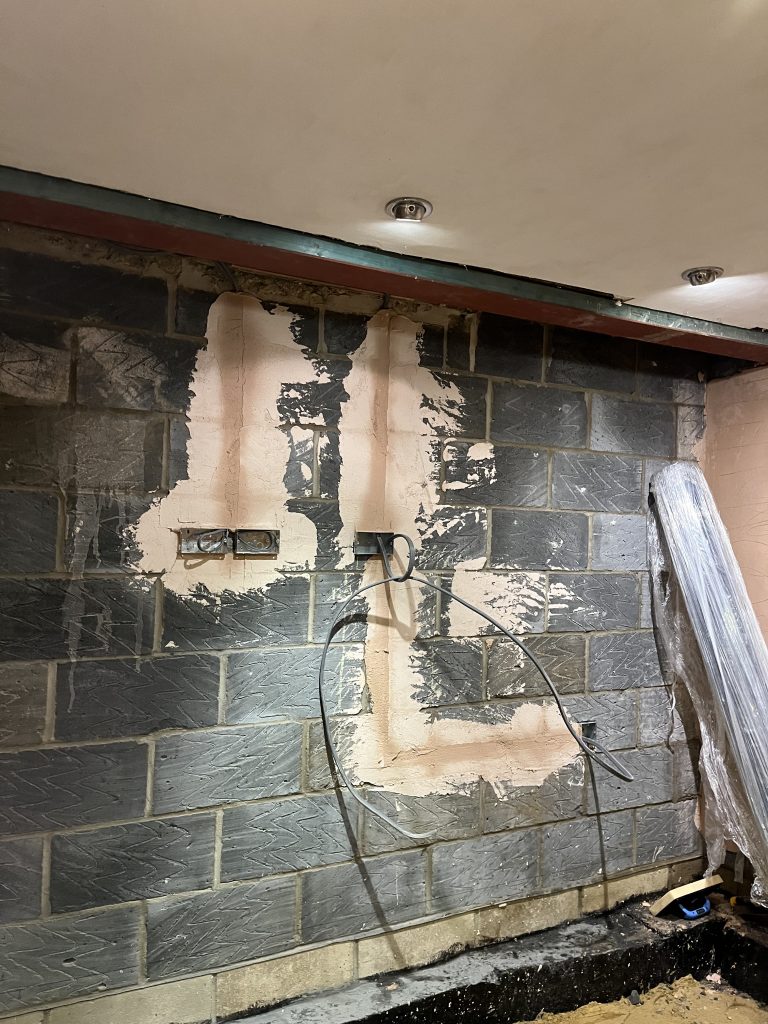
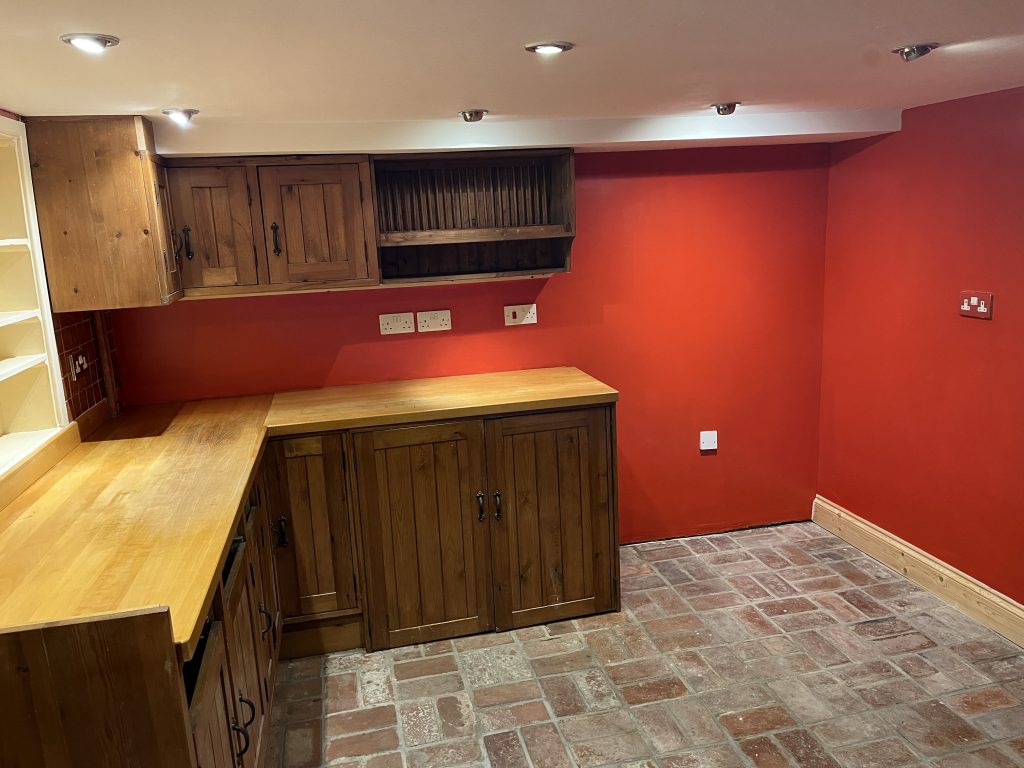
First-fix electrics were installed, cables traced, and the wall surface was finished with hard wall and then multi-finish plaster. The kitchen floor was reinstated to Building Control specification, and the area was prepared for final decoration. - Quality Assurance:
Building Control inspected the works at four key stages: steel installation, blockwork rebuild, floor installation prior to concrete pour and final completion, ensuring compliance throughout.
Has it been evaluated? How successful has it been?
The project was completed to a high professional standard. The contaminated wall sections were safely
removed, and the chimney was permanently stabilized with steel supports and reinforced blockwork. The
phased approach ensured structural integrity at every stage, with all works signed off by Building Control.
The finished space was structurally sound, visually cohesive, and ready for further use, with the client
expressing satisfaction with the outcome.